
Laura DeVito is a writer who works across both contemporary art and children’s storytelling. She regularly writes art reviews, approaching exhibitions with curiosity, attentiveness, and a sensitivity to how visual experience shapes perception. Alongside this, she has recently begun creating children’s books, a creative turn inspired by welcoming her daughter into the world. In her latest projects, DeVito experiments with AI-generated illustrations as part of a modern, exploratory storytelling process. Her greatest joy comes from hearing her child eagerly ask for stories made especially for her. The warm responses she has received from both readers and fellow art lovers continue to encourage and energize her creative path.
Art Reviews
DOX: BabyDox Workshop | 2026 | February 12
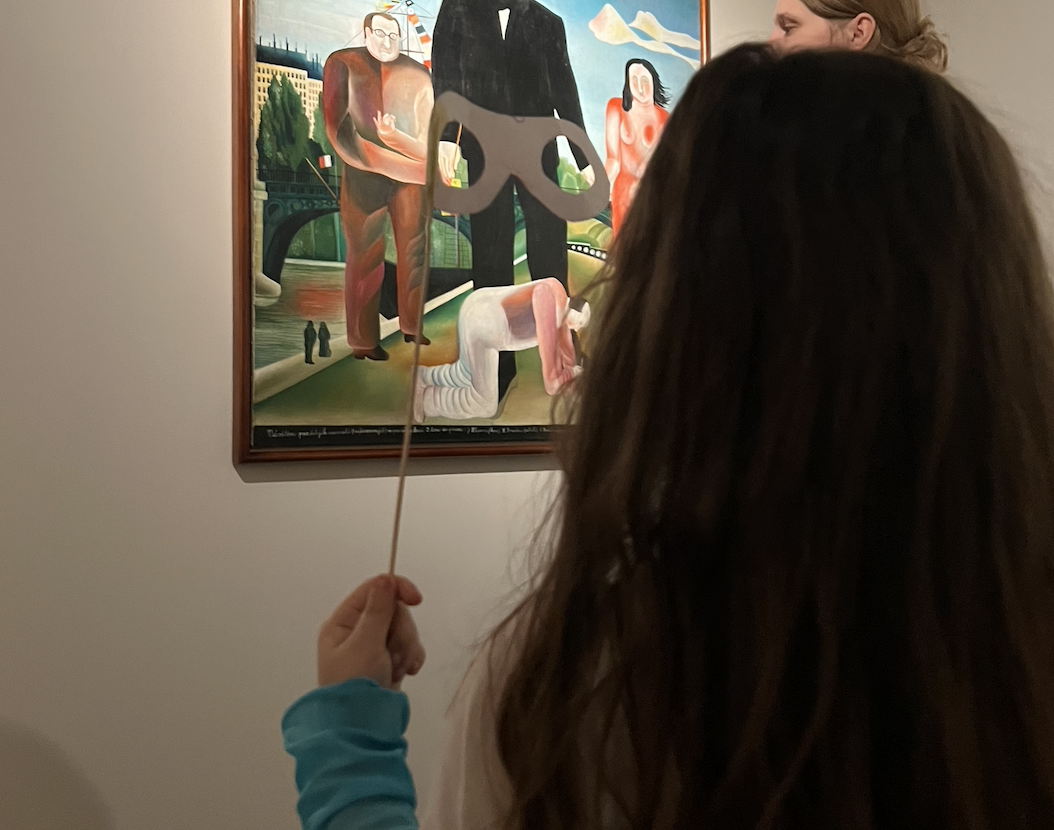
Children peered at artworks through masks they had just made, perfectly timed for carnival season. It was a playful way to frame how we looked at art while also slowing us down to truly absorb everything Dox has to offer. BabyDox felt both joyful and immersive, and it was ideally suited for my almost four-year-old. Designed for ages two to four, the workshop had plenty for both children and accompanying adults to enjoy.
We took off our coats and shoes and stepped into the room, warmly welcomed by Dox staff. We were invited to create name tags with bright markers arranged on a cushion in the center of the expansive space. Once we settled in, the facilitators encouraged the children to search for puzzle pieces cleverly hidden throughout the room. Each child discovered one and brought it back to the circle, where the fragments assembled into an image of the building as it once appeared. Through this, we learned more about the history of the Dox site we were experiencing firsthand.
Next came mask-making. The children colored their designs, attached them to sticks, and we stepped into the exhibition. We were surrounded by the rich and varied work of Eva Švankmajerová, spanning painting, video, and sculpture. I was reminded of watching Jan Švankmajer’s films decades ago on a bunny-eared television in Kansas, so it felt especially meaningful to encounter those films again here, now in conversation with Švankmajerová’s work at the center. At first the children entered cautiously, then gradually grew more confident, lifting their masks to look closely at the pieces introduced to them.
After exploring the gallery, we returned to the children’s area to create our own art. There were many hands-on options: mixing paints to produce prints, drawing with white crayon and revealing it with broad brushstrokes, and digging through a sensory bin of rice to uncover small treasures like a golden spoon. There were also large foam panels for collaborative fort-building, which quickly became a favorite.
Overall, the experience felt carefully considered for this age group, and we had a truly lovely time. I genuinely appreciate when art spaces welcome children in such creative ways. Starting early with art helps them learn to see the world differently, and this workshop did exactly that.
#BabyDox #DOXPrague #KidsAndArt #ArtWithChildren #Familyart
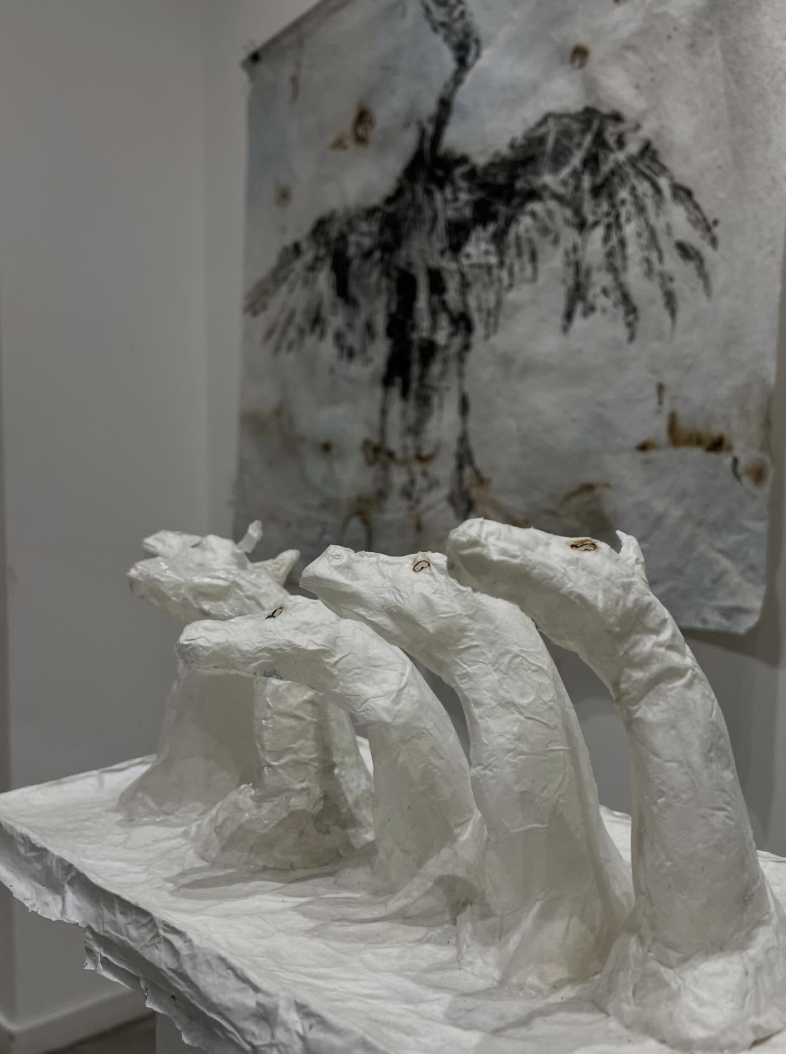
Toyen Gallery | 2026 | March 10
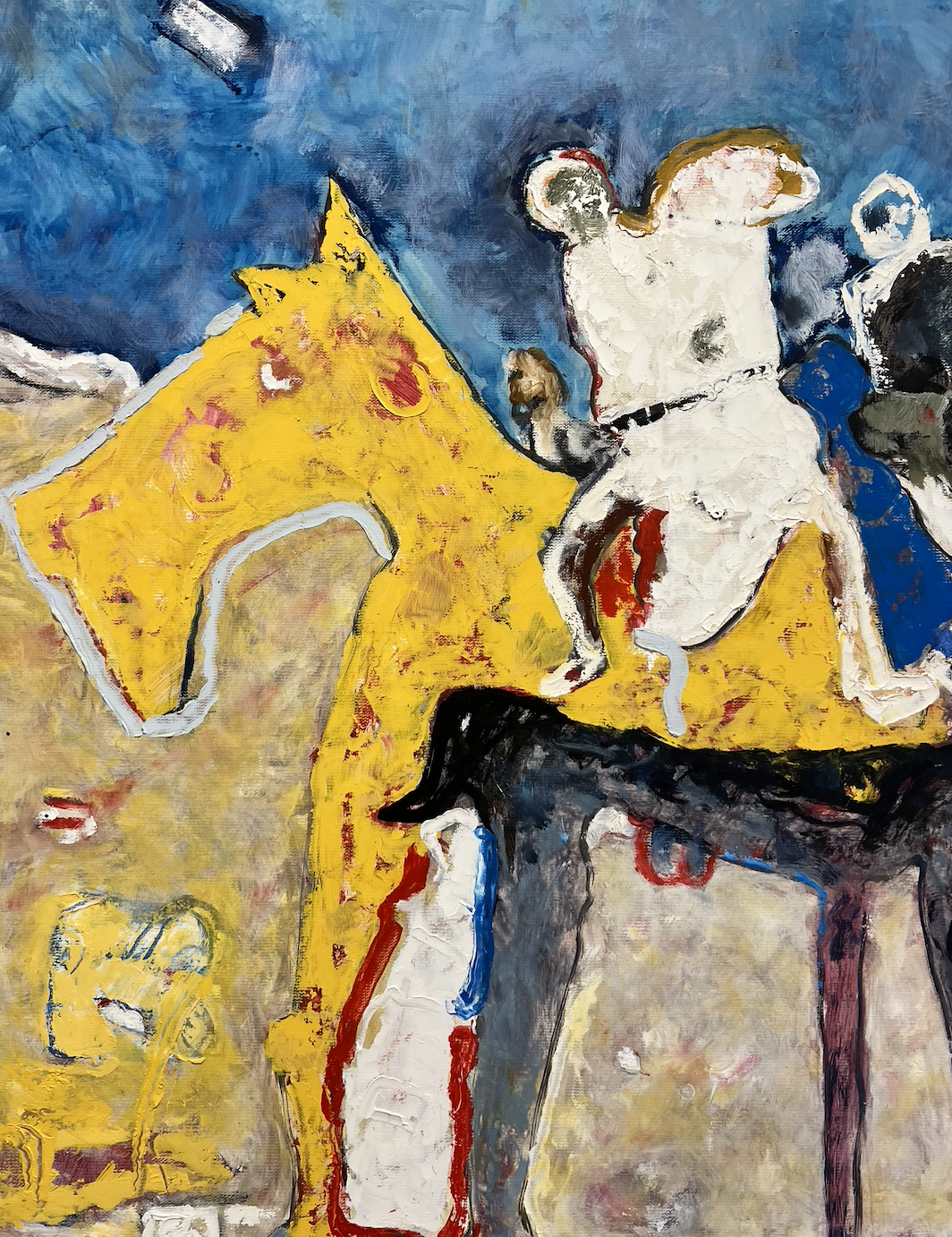
A yellow horse with red markings carries a quirky passenger who could be one of the friends of Donnie Darko. The image is one of the many paintings greeting visitors at Toyen Gallery in Václav Benedikt’s exhibition. The works are laced with hidden meanings and bursts of color that push into the sunlight of reality. Benedikt blends surrealism with a contemporary sensibility, creating paintings that invite viewers to look again later, wondering what they might have missed the first time.
In “Tajná jízda” (“Secret Ride”), the horse appears to have two heads and becomes a central metaphor. The dual heads suggest confusion and a lack of direction. The rider faces left, hinting that a choice may eventually be made. Beneath the horse is a field of blue that evokes water and movement, suggesting the need to follow the current when a path forward seems uncertain. Inside the yellow body of the horse sits a smaller black horse, possibly symbolizing youth or an inner voice guiding the journey. Meaning continues to build through texture, iconography, and color. “Torzo v modré” resembles a sewing machine, layered with the three-dimensional texture of a pocket. Blues dominate the composition, framed by a white cloud outline and thin red lines with an X marking the spot. The painting reads like a tribute to the labor and creativity it takes to turn fabric into something wearable.
“Duchovní spojení” continues the cloudlike ambiguity. Shapes drift through fields of blue and white punctuated by red marks. Some lines appear drawn by finger rather than brush, giving the work a visceral quality. The more one searches for meaning, the more the forms resist clarity, and that confusion draws the viewer further in. In “Žně,” blocks of brown and yellow with hints of green recall the landscapes of Paul Cézanne. The flattened space also evokes wide prairie plains. Bright colors remain balanced by soft whites and yellows that temper the composition. “Pomerančová krajina” suggests heat rising from beneath the earth’s surface. The imagery can be likened to the geological forces depicted in the video for Mutual Core by Björk, where pressure builds until it breaks through the surface. The final piece, “Inspirace modrou,” resembles an iceberg shaped like a human heart composed of faceted surfaces.
There are also several lithographs throughout the exhibition. Unlike the canvases, they feel sharper and more deliberate in their construction. The lines appear more controlled and graphic, and the colors sit apart from one another rather than blending into layered fields. This shift in medium introduces a different rhythm within the show, momentarily grounding the viewer before returning to the more fluid language of the paintings.
The exhibition ultimately feels like stepping into someone’s dreams. As with dreams, the details fade upon waking and must be pieced together again through fragments and impressions. Benedikt’s paintings leave viewers wanting to return, to look again, and to continue searching for what might still be hidden beneath the surface.
#Czechart #ToyenGallery #Bjork #DonnieDarko #ContemporaryArt
Baroque Chapel at IIC | 2026 | February 22
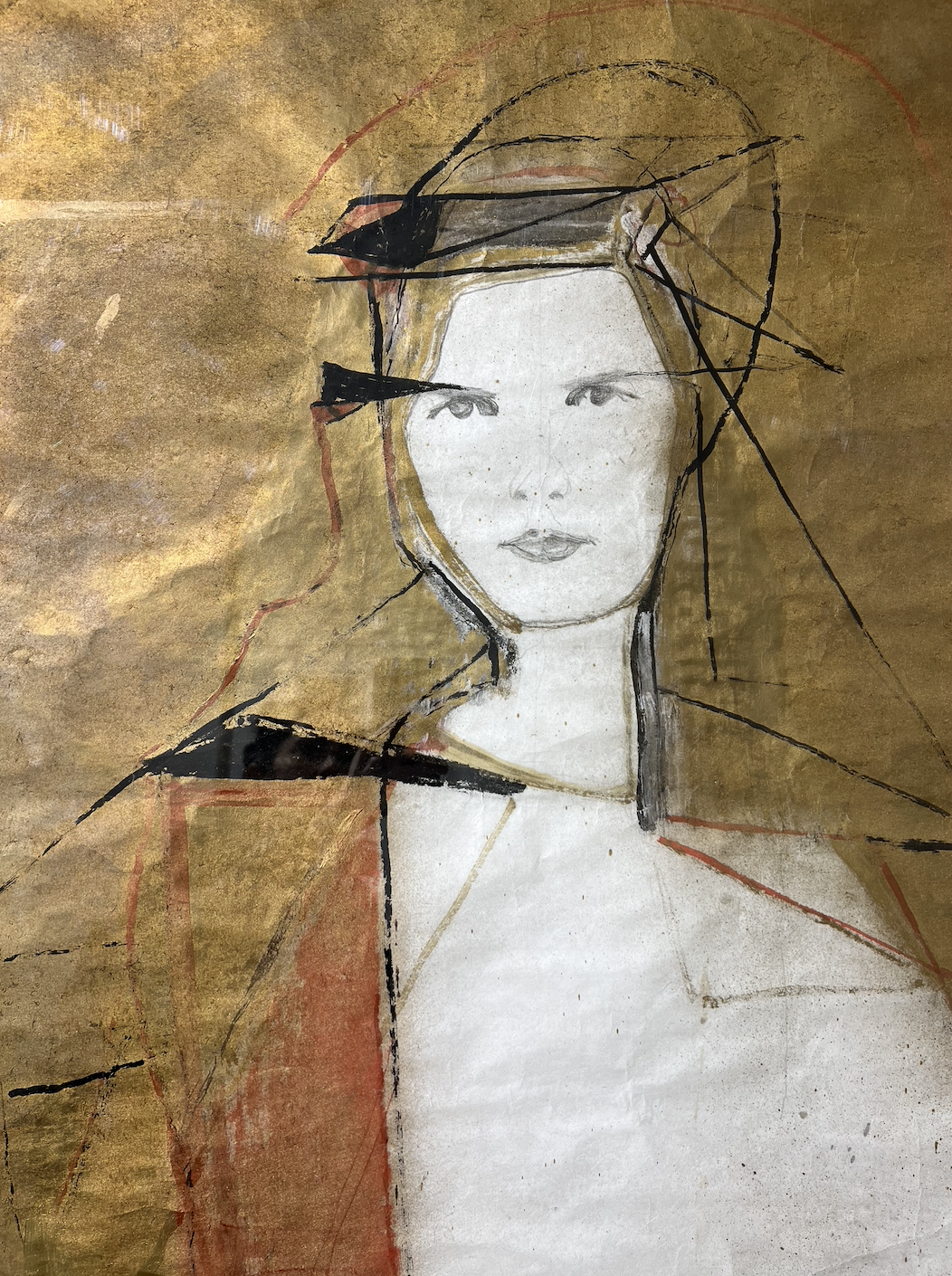
An upside-down penny tails up is affixed to a page nested in dense swirling marks. Nearby, an ominous figure and an outstretched hand appear to beckon, whether summoning the coin or the viewer remains unclear. Is the penny a sign of luck, or its inverse? In the hands of Mario and Marisa Merz, their artwork is cold and calculating, yet rendered with a surprising plumpness and vitality through careful attention to line and color.
The exhibition took place in the Baroque chapel of the Istituto Italiano di Cultura a Praga, presented in collaboration with the Fondazione Merz. Tucked into the heart of Malá Strana, amid embassies and the steady flow of tourists bound for Petřín Hill or Prague Castle, the space feels like a quiet interlude. Admission is typically free, and the intimacy of the chapel heightens the encounter with the work.
The Merz’s artwork from the 1980s reveal distinct sensibilities. Mario’s compositions tend toward straight and jagged lines, building depth through layered materials and assertive mark making. His surfaces feel angular, even architectural. Marisa’s works, by contrast, are more fluid. Her contours waver and soften, even as certain lines begin and end abruptly. Where Mario’s images seem to recede inward, Marisa’s appear to rise from the page, pressing gently into the viewer’s space.
Yet Mario’s earlier works from the 1970s introduce an unexpected softness. His depictions of hands swell in bulbous forms, tinged with pale pinks and yellows. The shift from these rounded gestures to the sharper linearity of the 1980s suggests not only personal evolution but also a broader cultural transition, from the diffuse warmth of late 1970s palettes to the harder, metallic edges of 80s punk and electronic dance era. The change reads less as rupture than recalibration.
Marisa’s pages vibrate with fevered pencil strokes. The fineness of her lines creates a paradoxical welcome. The works are intricate, even agitated, yet inviting. Together, the Merzes demonstrate a masterful command of line and color. Their compositions simultaneously deter and beckon, balancing plump, almost tender forms with harsh incisions. A restrained monochrome field might suddenly pulse with a sharp chromatic interruption. The tension holds.
“Premeditated” is an apt descriptor. These are not casual gestures but deliberate constructions. Mario’s early training in medicine and Marisa’s background in ballet seem faintly legible in the discipline of repetition and control. Recurrent strokes carve grooves into the surface, suggesting both material insistence and mental focus. Though the exhibition presents two distinct practices, the dialogue between them is so seamless that the boundaries blur. One could almost mistake the pairing for a single, multifaceted voice.
The show may have closed, but the chapel space continues its programming, offering future exhibitions that promise a similarly thoughtful engagement with history, culture, and form.
#MarioMerz #MarisaMerz #ArtePovera #PragueArtScene. #ContemporaryArt

Click on book for purchase.

Click on book for purchase.

Click on book for purchase.